


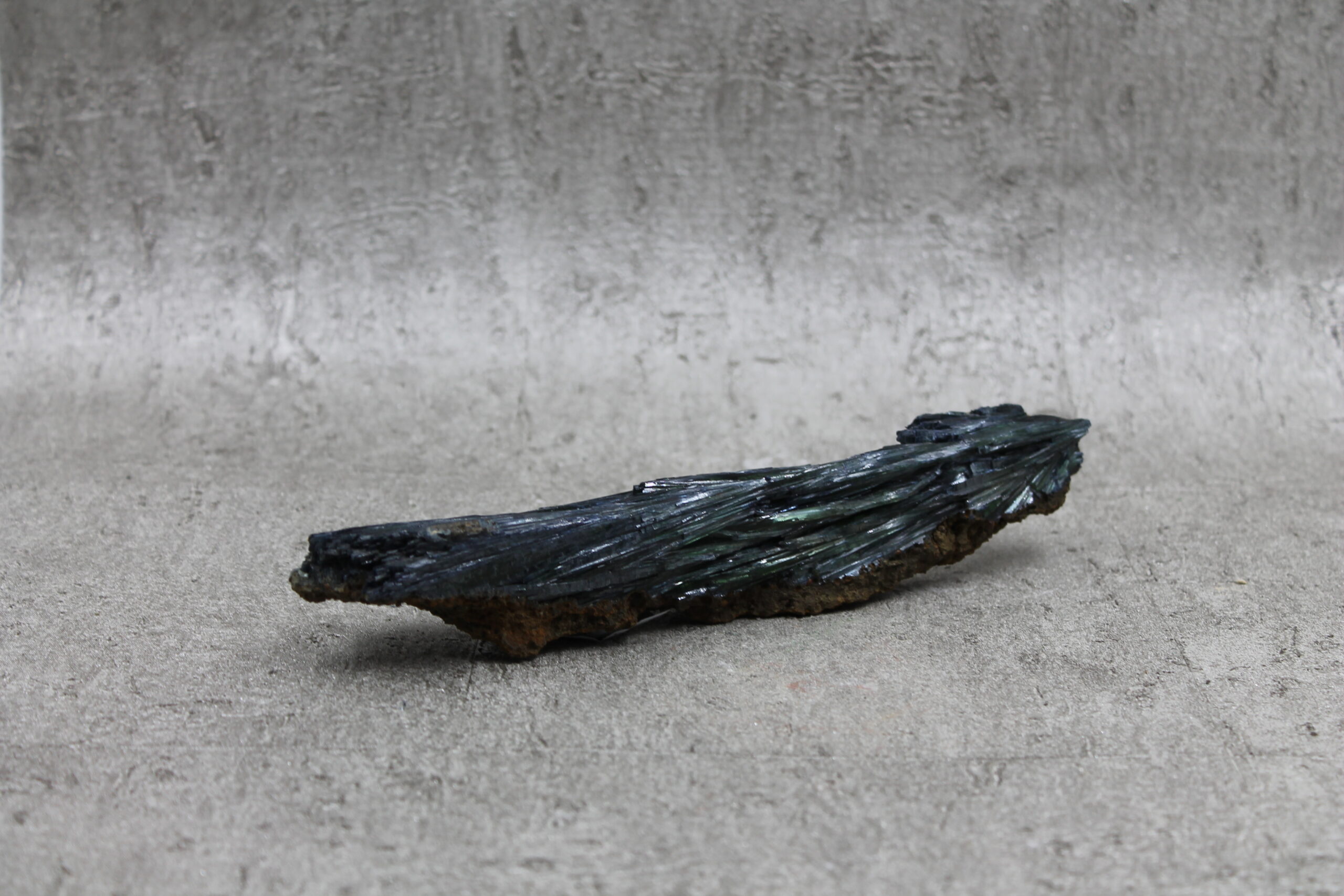
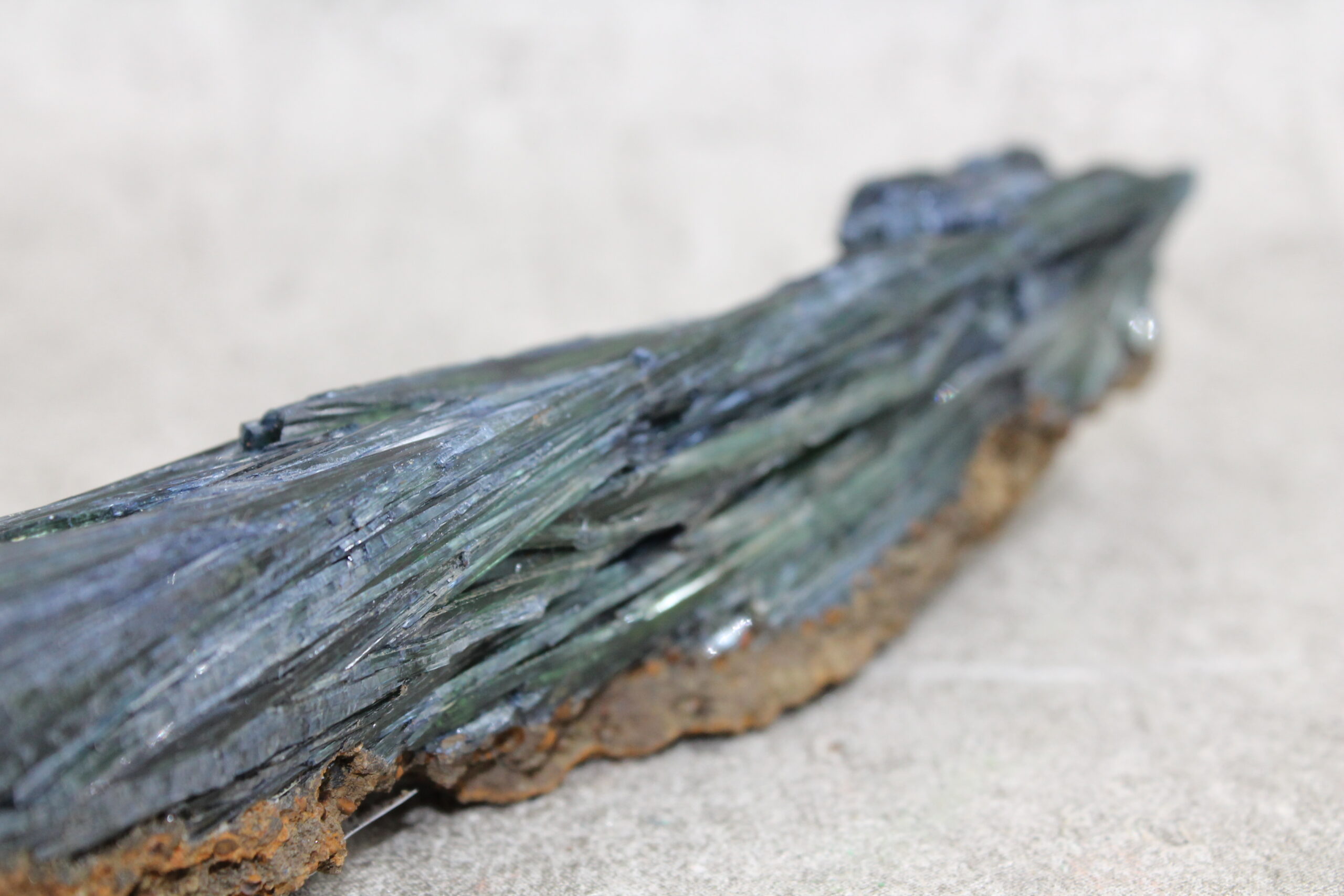
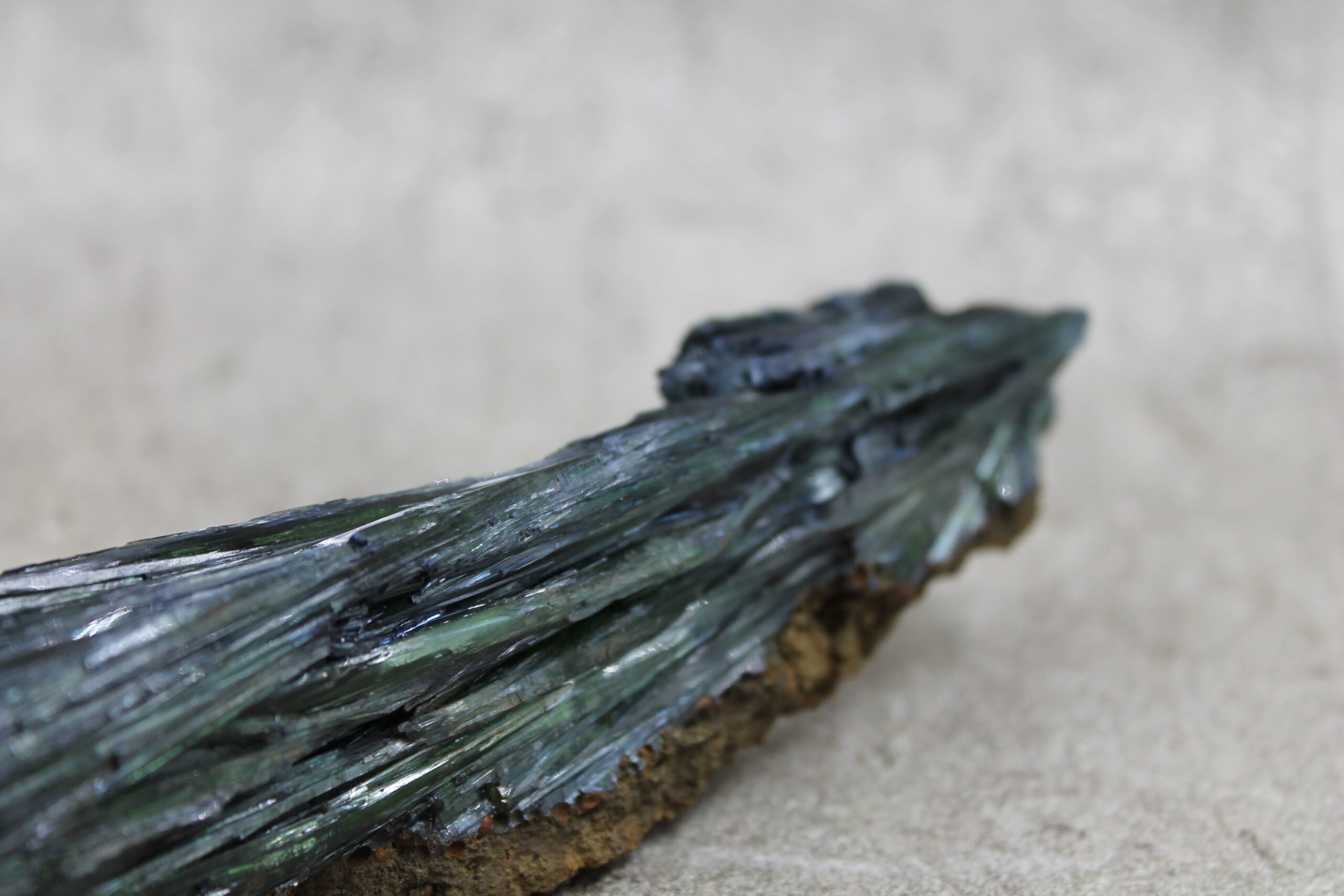

Description
Where does this Vivianite Cluster originate?
Vivianite was first discovered in Cornwall England in 1817 by John Henry Vivian. It is a rare mineral that only forms in very specific circumstances. Deposits are now known in South America, USA, Russia, and some parts of Europe. The most exceptional blue crystal forms have been coming from Bolivia.
These lovely collectors’ examples also come from Bolivia.
What is Vivianite?
Vivianite is a hydrated iron phosphate mineral which is found in many geological environments, but the beautiful but delicate blue to pale green crystal forms are rare and highly collectable. It can take a variety of crystal forms and minerals can be substituted within the structure. Some of the best crystal forms have the habit of forming out of decaying organic material growing to replace material like bones or teeth. The best crystals form in hydrothermal geological conditions.
Vivianite is interesting in that it forms in colourless to light green crystal forms which on exposure to light will darken. The colour change is irreversible and will go through blue to dark green then to brown and dark purple and purplish black. This is a result of oxidisation.
What are the myths and legends associated with this Vivianite Cluster?
Vivianite is a fragile and rare crystal which was only formally identified after Henry Vivian discovered it in Truro around the start of the 1800’s. There are therefore no ancient myths and legends connected to Vivianite. However, we also have chemical analysis from medieval paintings where Vivianite has been used after a complex extraction process to produce a bluish pigment often used to paint skies. Unfortunately, Vivianite is unstable as a colour and oxidises in light, so the colour deteriorates over time through to grey. Recent analysis of some Vermeer paintings in 2002 also found evidence of Vivianite being used as a pigment in these pictures also.
What are the healing properties of this Vivianite Cluster?
Vivianite is attributed with helping bones, poor eyesight or problems relating to the eyes and for Alzheimer’s.
What are the spiritual properties of this Vivianite Cluster?
The lovely oceanic green of Vivianite connects with the heart chakra. It brings out compassion and empathy for ourselves and others. This is a gentle, peaceful stone that helps us address our own healing and reach out to support others who need our help. Vivianite cleanses the auric field, protects us and reflects negative energy back to the source. If you suffer from depression or low mood, then Vivianite is a lovely stone to work with. It really helps with healing emotional trauma and overcoming those personal obstacles that stand in the way of us fulfilling our potential.
How do I use this Vivianite Cluster?
This specimen is perfect for meditative and psychic work and is a good stone to keep in your meditative space or sleeping area. It is useful kept in a place where you require focus and mental clarity at work or in any aspect of your life. However, it does need to be kept out of the light. I would use a small material cover to put over the Vivianite when it is not in use for your meditative purposes. Alternatively display it in a very dark area away from penetrating natural or artificial light.
Which crystals work well with this Vivianite Cluster?
This specimen would work really well with a high vibration stone like Moldavite or perhaps another gentle heart energy like Rose Quartz.
How do I care for my Vivianite Cluster?
Vivianite is a fragile crystal that will break easily. It needs to be handled carefully. Vivianite will change colour in light. This causes oxidisation within the crystals which will turn it blue through to brown, purple and eventually purplish black.
What Zodiac sign is Vivianite associated with?
Vivianite is a crystal attributed to CAPRICORN and CANCER
What Chakras are Vivianite associated with?
Vivianite works well with the HEART chakra.
How Large is this Vivianite Cluster Specimen?
This is a high-grade Vivianite Specimen. The size is approximately 344g in weight and 220MM x 35MM.


Reviews
There are no reviews yet.